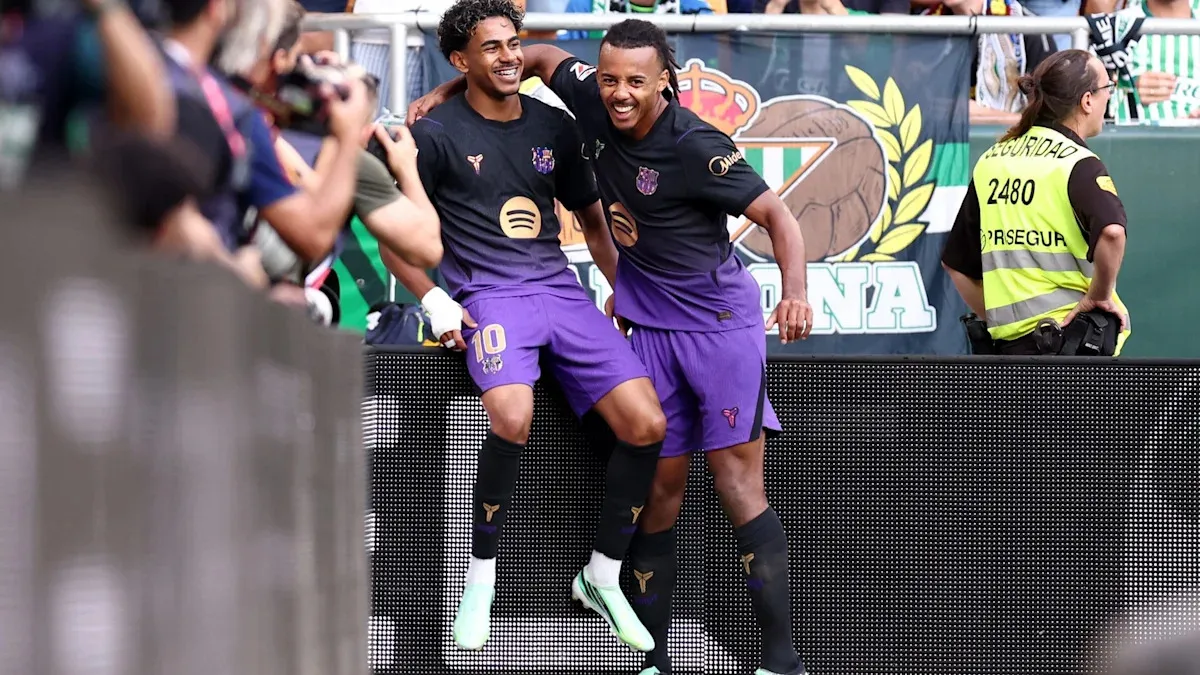
Hansi Flick’s La Liga campaign at Barcelona has been defined by adaptability, and his latest masterclass against Atletico Madrid on Sunday evening in the 12th round was no exception. With the team reeling from a first-half collapse—stretched thin by Flick’s starting choices—the German coach didn’t just react; he recalibrated. Three decisive substitutions reshaped Barcelona’s fortunes, turning a deficit into a 2-1 victory that underscored his ability to extract maximum performance from his squad.
The first half had been a cautionary tale of misplaced priorities. Flick’s initial lineup, featuring Farinas at right-back and Marc Bernal in place of Rodri, left Barcelona exposed. Atletico’s relentless pressing and clinical finishing—including two chances saved only by Joan Garcia’s heroics—made the deficit feel inevitable. Yet the goalkeeper’s reflexes weren’t enough to mask the deeper structural issues. Barcelona’s chase for possession had become a liability, their midfield unable to dictate tempo or shield the defense. It was a half where every tactical flaw was exposed, and the margin for error vanished.
Flick’s intervention began with a defensive overhaul. Recognizing the urgency, he pulled Farinas and Bernal from the field, replacing them with a more robust backline. But the real turning point came in midfield and on the left flank. Cancelo’s lack of impact prompted Flick to bring on Christensen for Balde, while shifting Gerard Martin back to left-back—a tactical pivot that unlocked Barcelona’s attacking potential. The second half became a different game. Atletico’s rhythm was disrupted, their forward runs stifled by a more compact defensive shape and a midfield that now dictated play. The shift from defensive passivity to aggressive pressing forced Atletico into errors, culminating in Fermin Lopez’s equalizer and the decisive goal.
The praise from Spanish media has been swift and specific. *Marca* credited Flick’s half-time changes with carrying half the credit for the win, arguing that his corrections addressed the glaring errors of the first half. The brilliance of Garcia—who denied two decisive Atletico chances—was noted, but the narrative centered on Flick’s tactical courage. His willingness to abandon flawed starting options and reengineer the team mid-match is a hallmark of his Barcelona tenure. Whether it’s adjusting to injuries or exploiting Atletico’s weaknesses, Flick’s ability to read the game in real time remains his greatest asset.
This victory isn’t just about the result; it’s a statement on Flick’s evolution as a manager. His time at Barcelona has been marked by tactical flexibility, and Sunday’s performance proved he can turn around a game when the chips are down. The challenge now is whether this momentum translates into consistency. With Atletico’s resilience and Barcelona’s own internal pressures, the next few rounds will test whether Flick’s half-time genius can sustain the club’s push for European ambitions.