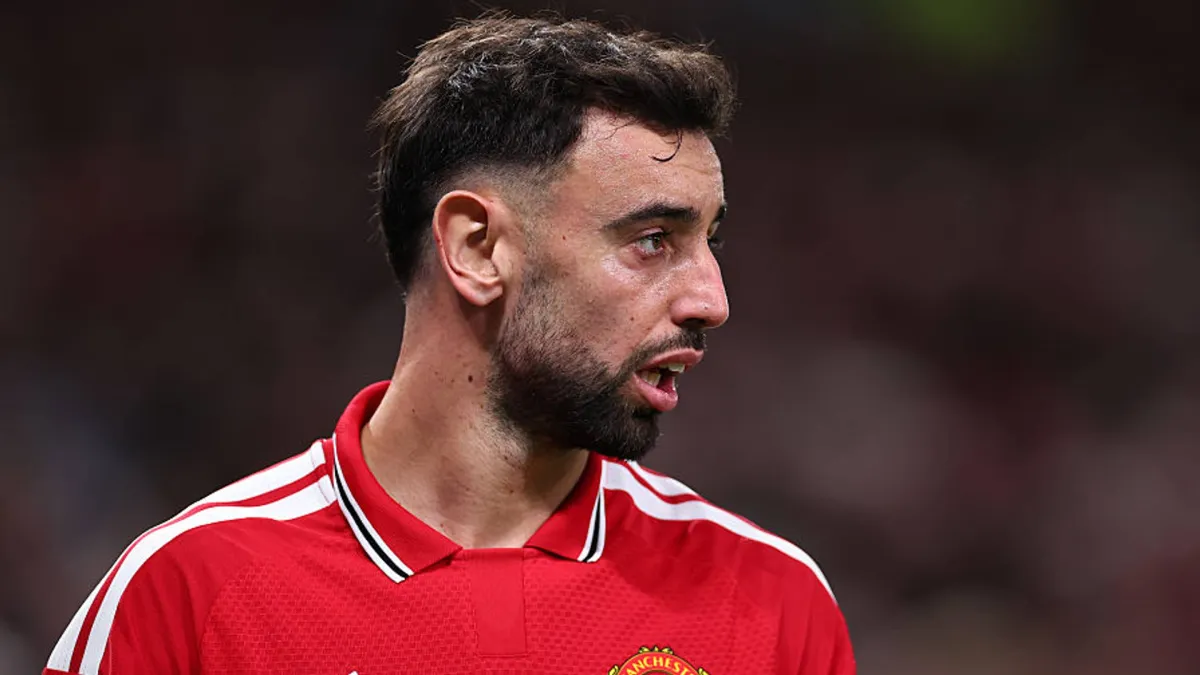
The return of Bruno Fernandes to Manchester United’s first-team setup is a tactical and managerial gamble that could decide the fate of two Premier League titans. After a week of uncertainty following his post-match comments and subsequent exclusion, the Portuguese midfielder has cleared the air with Michael Carrick, securing his place in the starting XI for the critical clash against Chelsea at Old Trafford. The timing couldn’t be more fraught: Carrick’s future at the club is already under scrutiny, and United’s inability to score without Fernandes has exposed a glaring weakness in their attack.
Fernandes’ absence last weekend against Compo—where United’s possession-heavy approach yielded just one goal—highlighted the precariousness of their current form. Without him, the team devolved into a disjointed, possession-starved entity, struggling to break down even mid-table opposition. His return now isn’t just about personal vindication; it’s a necessity. Carrick’s decision to trust him again signals a recognition that United’s identity—built around Fernandes’ creativity and leadership—cannot be abandoned. Yet the challenge remains: can he replicate his earlier brilliance, or will this be another fleeting resurgence before the inevitable decline?
The tactical adjustments required are immediate. Diogo Dalot’s return to the right-back position is a logical move, given his defensive solidity and ability to initiate attacks. His exclusion last weekend left United vulnerable in transition, and his presence could provide the stability needed to counter Chelsea’s high line. Harry Maguire, who stepped into the captain’s armband in Fernandes’ absence, will be relieved to face a Chelsea side without João Pedro. The Brazilian’s absence softens their defensive structure, but United’s midfield—now reduced to a three-man unit without Fernandes—must still dictate tempo. Matheus Cunha, who has struggled for consistency, will be pressed to step up as the primary left-winger, though his form remains a question mark.
Carrick’s job is the elephant in the room. The club’s board has already hinted at unease, and United’s inability to compete for top-four finishes—let alone trophies—has fueled speculation about his future. This match isn’t just about three points; it’s a referendum on his managerial philosophy. Can he adapt United’s system to fit Fernandes’ strengths, or will the club’s decline continue regardless? The answer will be written in the margins of this fixture: Fernandes’ influence on the game’s outcome, the defensive resilience of Dalot and Maguire, and whether United can finally break down a Chelsea side that has become a fortress in recent weeks.
For all the drama surrounding Carrick’s tenure, the real stakes lie in what this match reveals about United’s trajectory. A win would be a statement of intent, proving that the club can still compete when its key pieces are aligned. A defeat, however, would deepen the sense of stagnation, reinforcing the narrative that United are a team in freefall. Fernandes’ return is the first step toward redemption, but the road ahead remains treacherous. The Premier League doesn’t reward half-measures—only dominance ensures survival, and for now, United are nowhere near that threshold.