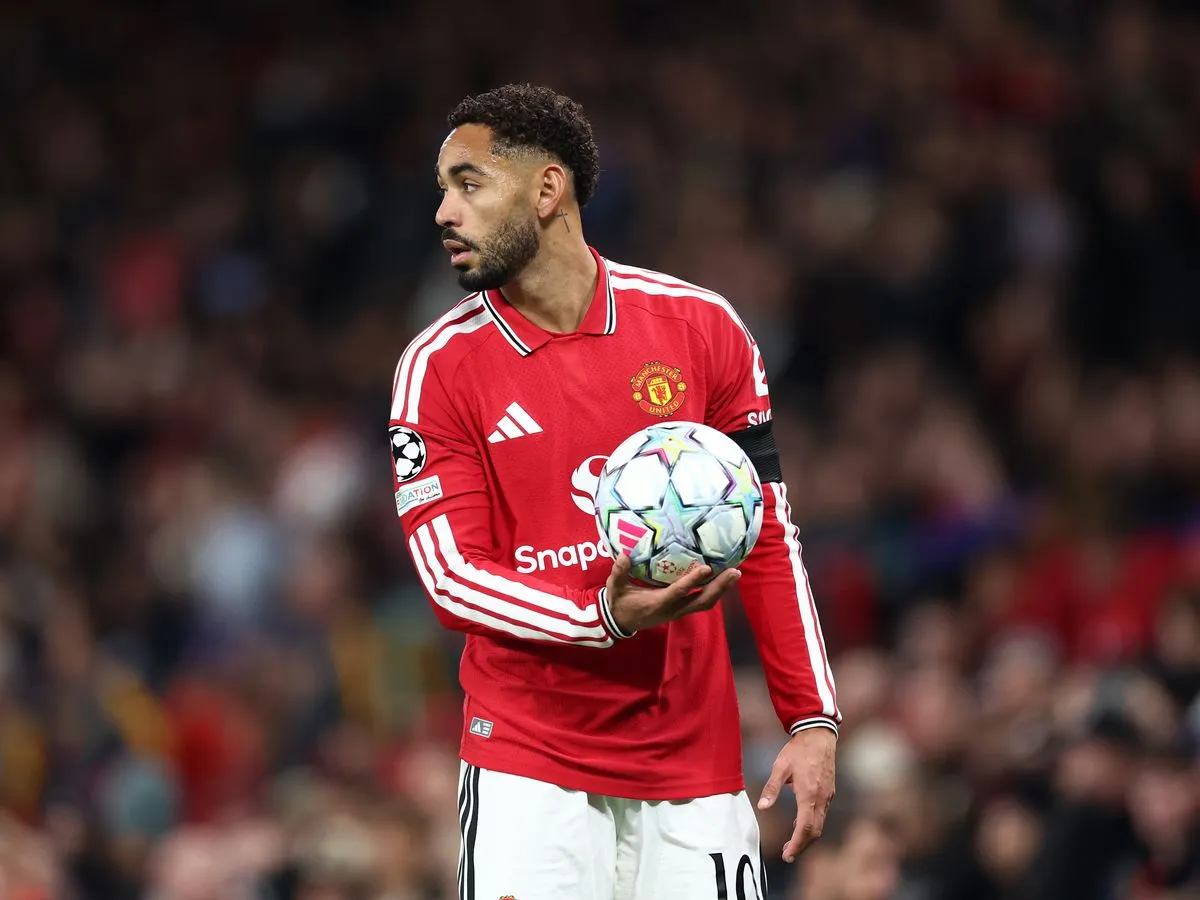
Michael Carrick’s interim reign at Manchester United has been defined by two contrasting narratives: the dramatic comebacks that have kept the club afloat, and the tactical inconsistencies that continue to haunt them. Among the latter, the treatment of Matheus Cunha has become a microcosm of the club’s deeper struggles. After a Champions League penalty row that left Carrick seething and a Premier League victory that showcased Cunha’s potential, the Brazilian’s role under the interim manager is now under intense scrutiny—both from the dressing room and the stands.
The turning point came in Tuesday’s Champions League clash against Roma, where Cunha’s defensive errors—particularly the controversial penalty awarded against United—sparked immediate backlash. Carrick himself called the referee’s decisions ‘baffling,’ singling out the disparity in how Cunha’s challenge was judged compared to Amad Diallo’s identical foul. Yet, just days later, Cunha was the catalyst for United’s 2-0 Premier League triumph over Tottenham, threading a through-ball to Bryan Mbeumo that set up the opener. The contrast was stark: a player who can elevate United’s attack but whose defensive lapses remain a liability. Carrick’s challenge now is clear—can he find a role for Cunha that balances his offensive firepower with the defensive discipline United desperately needs?
The stakes couldn’t be higher. With Carrick’s job security hanging on a string of results, every decision—including Cunha’s—will be dissected for its long-term impact. The Brazilian’s transition from Wolves to United has been rapid, and while his first-team minutes have been limited, his presence in the starting XI against Spurs proved he’s not just a project. Yet, the Roma penalty row exposed a deeper issue: United’s defensive organization under Carrick is still fragile. Cunha’s inclusion in the starting XI against Aston Villa this weekend will be a litmus test. If he delivers another performance that combines creativity with defensive solidity, it could solidify his place in the team. If not, the pressure on Carrick to overhaul his tactics—or even his coaching staff—will only intensify.
What’s undeniable is that Cunha’s arrival has injected urgency into United’s summer plans. His ability to unlock defenses—whether through his passing or his direct running—has been a rare bright spot in a season where United’s midfield has often felt exposed. But consistency is the key. At Wolves, Cunha was a reliable performer; at United, he’s still finding his footing. Carrick’s ability to trust him in high-pressure moments will determine whether Cunha’s potential translates into sustained success. For now, the interim manager has a delicate balancing act: leverage Cunha’s strengths without repeating the defensive missteps that nearly cost United the Roma game. The next few weeks will reveal whether Carrick can pull it off—or if United’s search for stability will extend beyond the international break.
One thing is certain: the debate over Cunha’s role isn’t just about his individual performance. It’s a reflection of United’s broader identity under Carrick. The interim manager has stabilized the team tactically, but the club’s future hinges on whether he can do more than just survive. Cunha’s next act will be a critical chapter in that story.