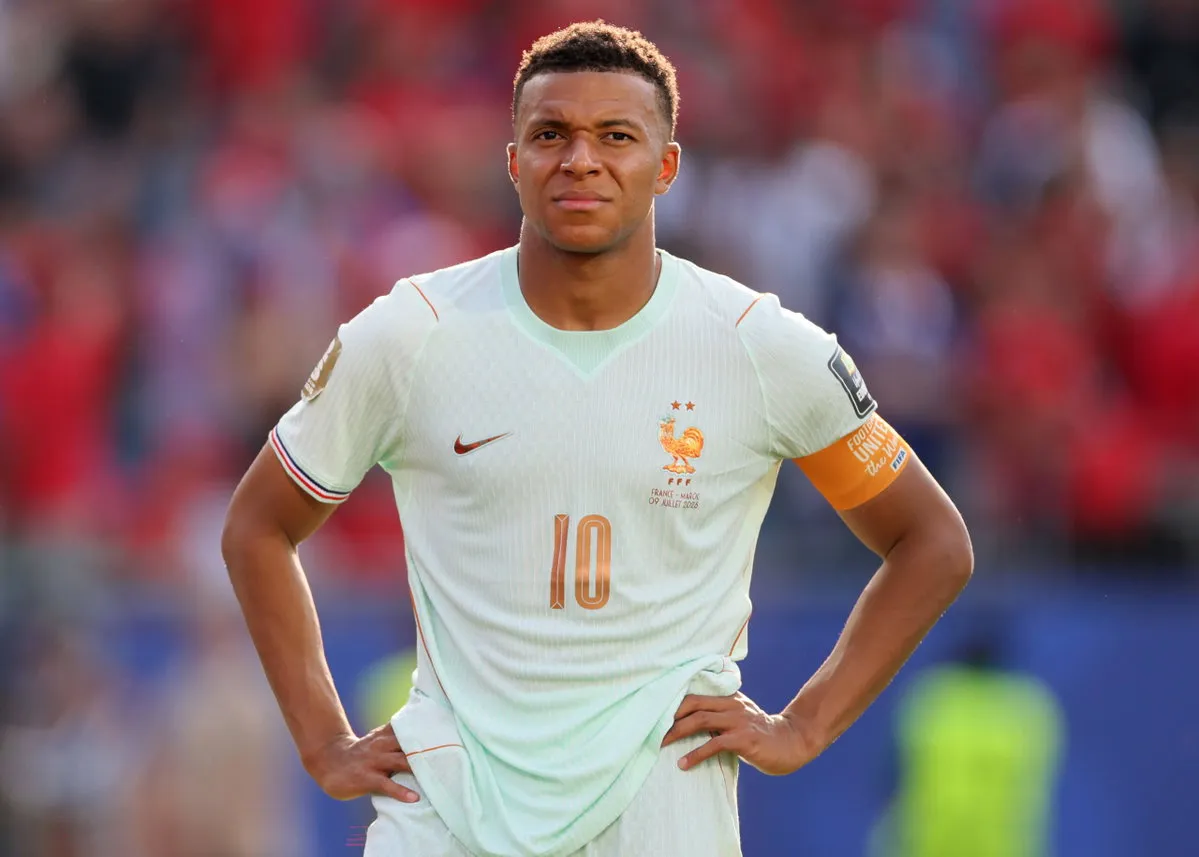
Kylian Mbappé’s career in China has taken a dramatic turn after a single, poorly judged remark about Mao Zedong ignited a firestorm of backlash that now threatens his multi-million-dollar endorsement empire. The Real Madrid forward’s attempt to dismiss an internet meme—where his face was superimposed onto images of the late Chinese leader—with a joke about a ‘Chinese dictator’ has prompted two major Chinese beverage brands to sever ties, while state-owned China Media Group has suspended all La Liga broadcasts on its networks. The swift, coordinated response underscores how quickly commercial relationships can unravel when cultural sensitivities are crossed, even unintentionally.
The controversy began when a video surfaced depicting Mbappé’s face merged with Mao Zedong’s iconic blue Mao suit, a meme that quickly spread across Chinese platforms. In a statement that did little to mitigate the damage, Mbappé claimed the remark was made in jest, describing it as a reference to ‘a guy… I think he was a Chinese dictator.’ The phrasing—combined with the visual meme—was enough to trigger an immediate backlash. Dongpeng Beverage Group, whose ‘Bushuila’ electrolyte drink featured Mbappé in prominent advertising campaigns across Shanghai and Beijing, became the first to cut ties. Within hours, a second major sponsor followed suit, leaving the French star’s commercial presence in China effectively erased overnight.
The fallout extended far beyond individual brands. China Media Group, which oversees state broadcaster CCTV, announced the suspension of all La Liga match broadcasts, a move that cuts directly into the league’s commercial ambitions in Asia. The decision was framed as a response to ‘words and actions that hurt national sentiment,’ a direct reference to Mbappé’s comments. La Liga’s president, Javier Tebas, issued an apology on behalf of the league, emphasizing that Mbappé’s remarks were made in a personal capacity and did not reflect the organization’s stance. Yet the damage to La Liga’s reputation in China is already done, with state television removing all advertisements featuring Mbappé and halting coverage of Spanish football entirely.
Mbappé’s apology, while swift, arrived too late to prevent the commercial fallout. Global brands including Dior, Rimowa, Nike, Hublot, and On Running had already removed promotional content featuring the player from their Chinese social media accounts. The backlash on platforms like Weibo was immediate and fierce, with users accusing Mbappé of exploiting China’s sports market while disrespecting its history. The nickname ‘Guigui,’ once a term of endearment for Mbappé’s resemblance to a Teenage Mutant Ninja Turtle, now carries a bitter irony as the controversy deepens. The incident serves as a stark reminder of the risks for global athletes navigating Asia’s highly sensitive political and cultural landscape, where even a misplaced joke can have consequences far beyond the pitch.
For Mbappé, the crisis marks a rare moment of vulnerability in a career defined by commercial dominance. His endorsements in China—ranging from electrolyte drinks to luxury fashion—were a cornerstone of his global brand, and their sudden disappearance underscores the fragility of such partnerships. As the fallout continues, the question remains whether Mbappé can rebuild trust in one of football’s most lucrative markets, or if this controversy will leave a permanent stain on his reputation in Asia.