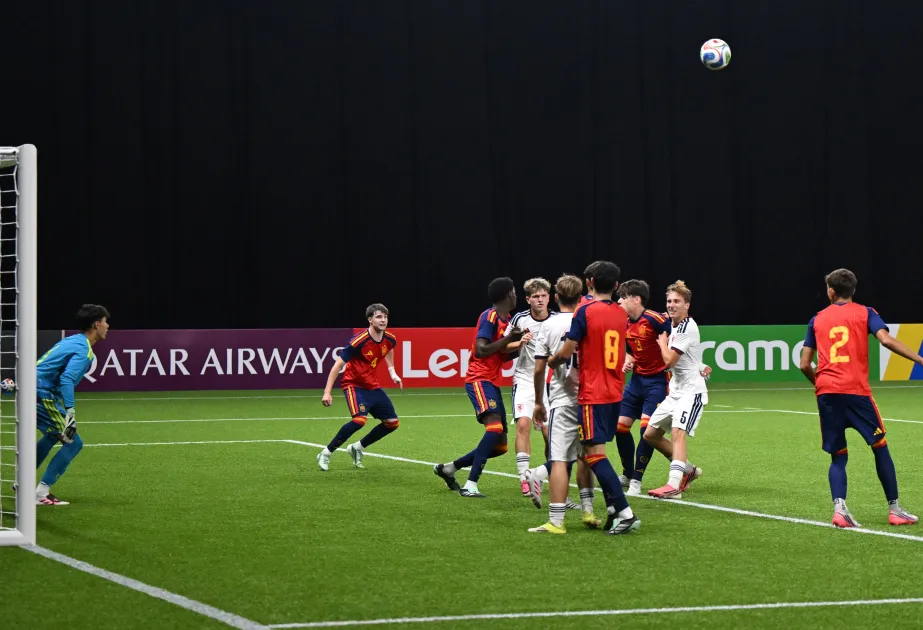
The FIFA U-15 World Cup has delivered its first-ever champion, and Spain’s under-15 team have done so with the kind of authority that suggests a future dynasty. In a final played before a rapturous crowd at Baku Crystal Hall, the Iberian side dispatched Czechia 3-0, their clinical performance leaving little doubt about their dominance. This wasn’t just a title—it was a statement, one that underscores the depth of Spanish youth development and the tournament’s immediate credibility as a showcase for the next generation.
The inaugural edition of the FIFA U-15 World Cup brought together 189 FIFA member associations, a staggering figure that underscored its ambition. Held in Baku, the event was more than a football tournament; it was a celebration of raw talent, with young players from every corner of the global game competing for glory. Spain’s victory wasn’t merely a result of skill—it was the product of tactical precision, composure under pressure, and a collective mindset that has long been the hallmark of their senior teams. The 3-0 margin was never in doubt, but the way it was achieved—through structured build-up play and decisive finishing—hinted at the kind of professionalism that could define this generation.
The final itself was a masterclass in control. Spain’s midfield dictated the tempo, their defensive organization stifling Czechia’s limited creative options, while their forwards operated with the confidence of players who had been groomed for moments like this. The absence of defensive errors and the clinical execution of chances were telling. It was footballing DNA in action, the same blueprint that has seen Spain’s senior teams dominate at every level. The tournament’s inaugural nature only amplified the significance of the victory, as the Spanish team became the first to lift the trophy in what will now be an annual event.
The ceremony that followed the final was a fitting climax to the tournament’s first edition. President Ilham Aliyev of Azerbaijan, a figure whose passion for football is as well-documented as his country’s rapid rise on the global stage, took part in the award presentation. His presence added gravitas to the moment, reinforcing the tournament’s status as a platform where nations invest in their future. For Spain’s young players, this title is more than a trophy—it’s a foundation. The path from Baku to senior international duty is well-trodden for their peers, and the fact that they’ve already begun that journey with such distinction suggests the best is yet to come.
What this victory also signals is the tournament’s potential. The FIFA U-15 World Cup was designed to bridge the gap between regional competitions and the full senior world stage, and Spain’s performance proves it has arrived as a credible competition. The 3-0 final result was a reminder that youth football is still about raw talent, but also about the systems that nurture it. For the 188 other nations that participated, the lesson is clear: if Spain can do it at this level, then the standards for the next edition will be set even higher. The beautiful game’s future just got a little brighter.