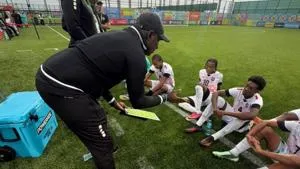
Trinidad and Tobago’s Under-15 boys’ national team fell short of head coach Randolph Boyce’s expectations at the FIFA U-15 World Cup and Festival in Azerbaijan. Reflecting on the tournament, Boyce identified inadequate fitness levels as a factor that limited the team’s performances, while describing the experience as a useful measure of the work required to compete consistently at international level.
Boyce’s assessment highlighted the gap between promising passages of play and the ability to sustain a competitive performance. Trinidad and Tobago showed encouraging signs during the tournament, but their results also exposed areas requiring further attention. The coach’s concerns about physical preparation place fitness among the priorities for the squad’s continued development.
There were positive moments in the opening phase. The Young Warriors began with a 3–1 victory over St Kitts and Nevis, lost 2–1 to Iraq and responded with a 7–0 win against the Cayman Islands. Djoshua Cyrus scored twice in the opening victory, while the Cayman Islands match produced goals from six different players, demonstrating the squad’s ability to create chances and share the scoring responsibility.
Those early results did not translate into sustained success. Trinidad and Tobago finished third in Group S with three wins and two defeats, collecting nine points. They subsequently competed in Tier C and ended the tournament in 94th place after a 2–1 defeat to Gibraltar in their final match.
The implications of Boyce’s assessment extend beyond the final position. The festival gave the players experience against opponents from different regions and exposed them to contrasting styles of football. Boyce had emphasised during the opening phase that the focus was on development, decision-making and learning to respond when mistakes were punished—not simply on winning individual matches.
The challenge now is to turn those lessons into more consistent preparation and performance. Boyce’s evaluation offers a starting point: retain the encouraging aspects of the team’s attacking play while addressing the conditioning and execution that limited their progress. For Trinidad and Tobago’s Under-15 programme, the value of the Azerbaijan experience will ultimately depend on how effectively those lessons inform the players’ next stage of development.