
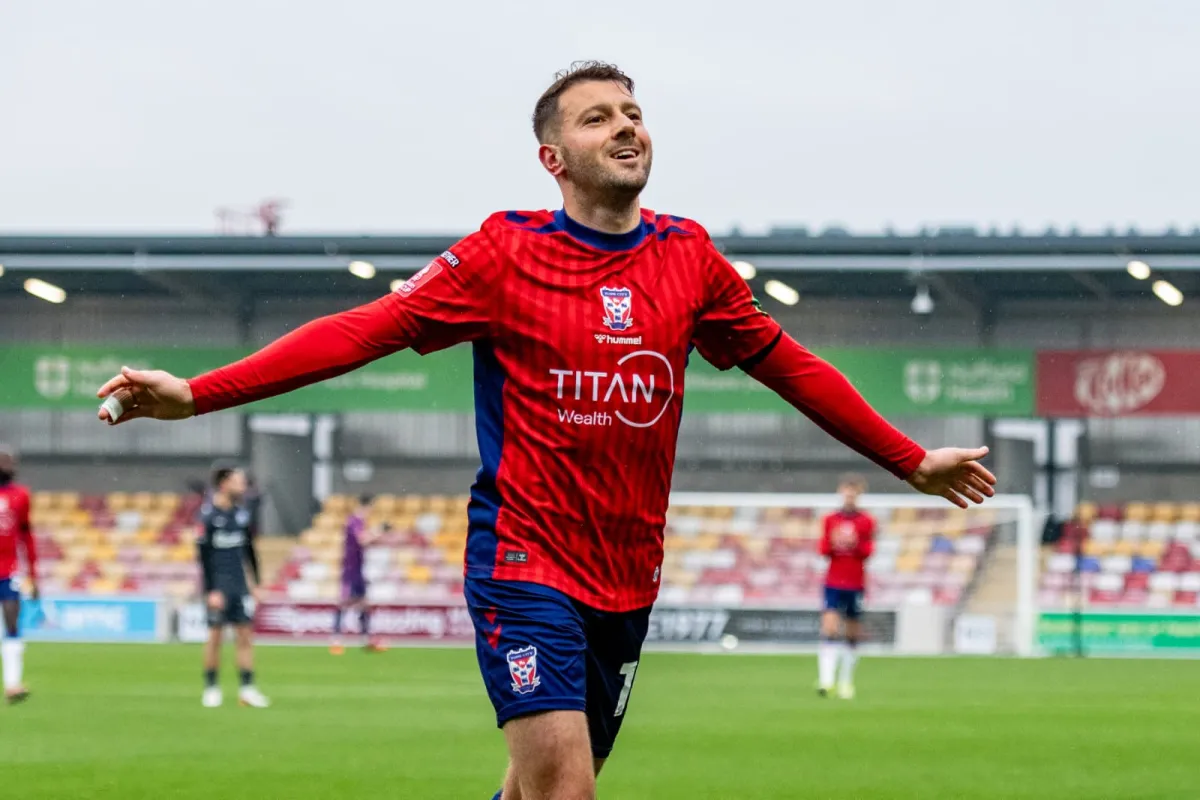
York City’s FA Cup first-round victory over Northampton was never going to be a tactical masterclass—it was a statement of intent. And in the space of 9.5 seconds, Ollie Pearce delivered one. The striker’s lightning-quick opener, a thunderous finish on a long ball from Zac Johnson, didn’t just break the record for the fastest goal in FA Cup history; it exposed the folly of doubting York’s unconventional approach.
For months, critics have questioned Scott Lindsey’s insistence on his team’s distinctive kick-off routine—a method that involves a high, direct ball played deep into the opposition’s penalty box. Yet on Saturday, that very tactic became the catalyst for a rout. Pearce’s first goal arrived so swiftly that Northampton’s defence barely had time to react, and his second followed before the half-hour mark. Alex Hunt and Josh Stones added to the tally, leaving the Cobblers’ opponents with no chance of recovery.
Lindsey, ever the pragmatist, refused to backtrack. ‘It was obviously a great start,’ he admitted, acknowledging the criticism his kick-off method has faced. ‘Certain people have criticised it, but I always felt we might get something from it—and what a finish it was.’ The manager’s confidence in the tactic was rewarded with a 4-0 victory, a result that not only secured York’s place in the second round but also reinforced his belief in high-risk, high-reward football. ‘If you score early, a big percentage of games then go in that team’s favour,’ he noted, underlining the psychological edge such an opening provides.
The victory wasn’t just about the goals—it was about momentum. York’s dominance in the first half set the tone for the entire match, and the Cobblers’ supporters will now demand more of the same. With a third-round clash looming, Lindsey’s gamble on his kick-off strategy has paid dividends, proving that sometimes, the boldest decisions yield the most spectacular results. For Pearce, it was a night to remember: ‘My fastest goal ever,’ he joked, though the achievement transcends personal glory. It’s a vindication of a manager’s vision and a reminder that in football, timing—and tactics—can be everything.